Housing is an almost unavoidable topic for every adult. In the conventional perception, homes have long been inextricably linked with high costs, lengthy construction cycles and fixed layouts. People spend years saving for a down payment and repaying mortgages, while building work drags on for months or even years. Once a house layout is finalized, it can hardly be adjusted. We seem to have taken it for granted that a home is bound to be a bulky, rigid and high-priced possession.
In recent years, however, Wujie Cloud Construction modular housing has stepped into the public spotlight. Breaking away from the traditional cast-in-place construction that relies on steel and concrete, it adopts a building method much like assembling Lego blocks. Requiring not a single brick or tile, a complete unit can be put together in just two days, featuring mobility, detachability and reconfigurability.
Many people still equate modular buildings with temporary construction site cabins or simple makeshift shelters, which is a widespread misunderstanding. Genuine modular housing is by no means a shoddy temporary dwelling. Instead, it is a forward-looking living solution that combines industrialized production, standardization and personalized customization.
01 Residential Construction Enters the "Assembly Line Era".
Traditional house construction is essentially an outdoor manual project. Restricted by multiple factors including weather, labor and site conditions, construction advances step by step through foundation work, walling, concrete pouring and interior decoration. Delays, rework and budget overruns are almost commonplace. For an ordinary residential home built to meet basic living needs, it usually takes half a year or even longer from groundbreaking to move-in readiness.
Modular housing, by contrast, shifts the entire construction process into factories. Its core principle is the industrialized breakdown of residential buildings. Designers first split a complete house into a set of standard modules. The living room, bedrooms, kitchen and bathrooms are made into independent units respectively. All procedures involving structure assembly, interior finishing, plumbing, electrical systems and soft furnishings are finished in the factory, solving more than 95% of potential problems in advance.
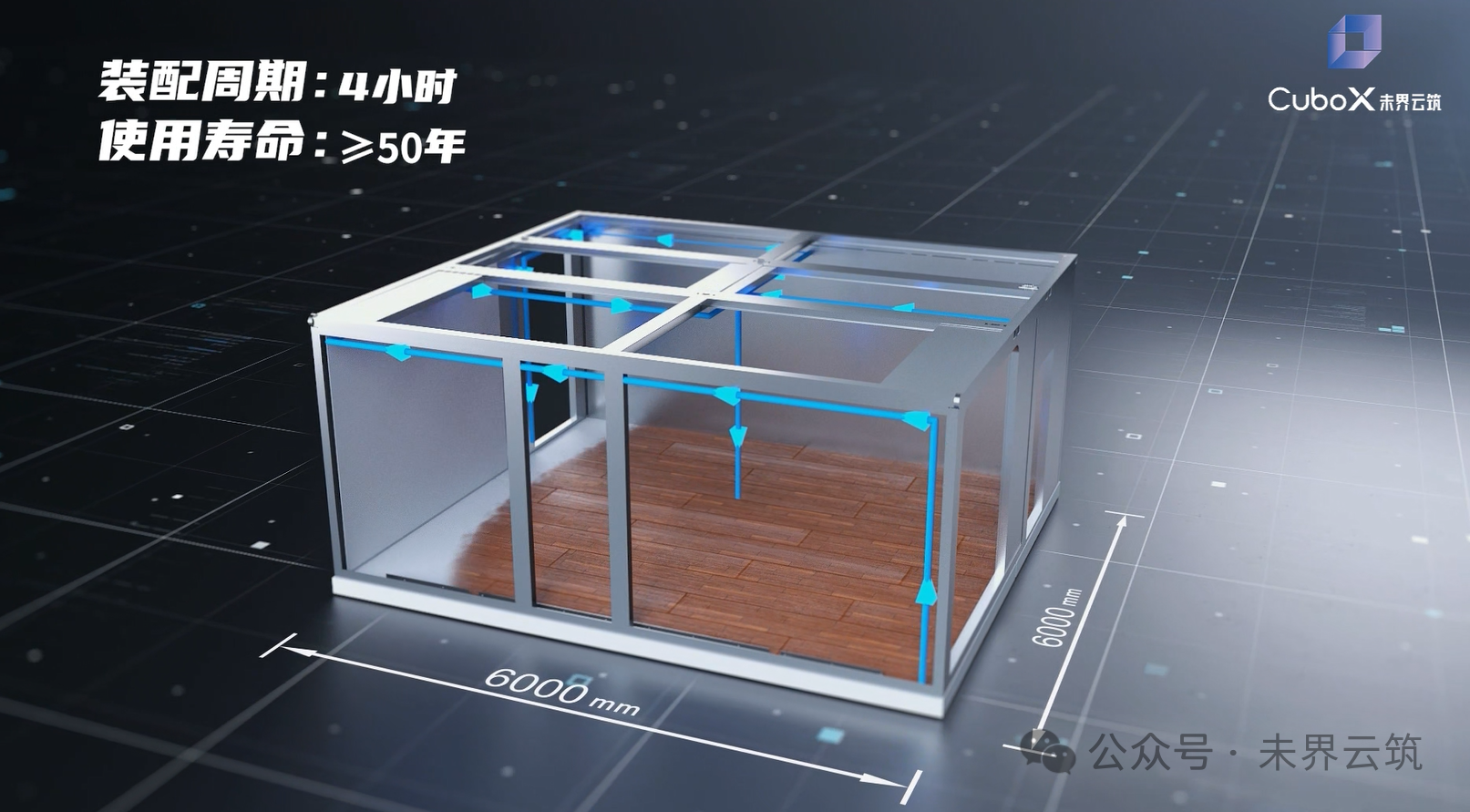
After the prefabricated components are transported to the site, the house can be rapidly formed simply by hoisting, assembling and fixing the modules. For most modular homes, the main structure can be put up within four hours, and the whole house is ready for delivery and use in roughly 48 hours.
What makes modular construction even more advantageous is its outstanding flexibility. Once a traditional house is completed, its layout is basically fixed and difficult to modify. Modular housing, however, can be disassembled, reassembled and expanded at any time. A two-bedroom one-living room layout suits small families; extra bedroom modules can be added after having children, and dedicated modules for courtyards or sunrooms can also be installed directly if needed. When necessary, the entire house can even be relocated entirely — from cities to remote countryside, or from one construction site to another. It truly realizes the vision of "a house that moves with its occupants".
02 Faster and More Economical House Construction
Many people worry that such speedy construction comes at the expense of quality and comfort. Yet the reality tells a different story.
In terms of costs, modular housing reduces labor redundancy and material wastage inherent in traditional building methods.
Standardized factory production greatly curbs construction material waste and cuts on-site labor expenses. As a result, its overall construction cost is generally lower than that of conventional buildings. For ordinary people, this means a lower housing threshold, less debt burden and superior cost performance.
When it comes to quality, modern modular housing mostly adopts a steel main structure. It outperforms most brick-concrete buildings in earthquake resistance, wind resistance, thermal insulation and sound insulation. All housing modules go through strict inspections before leaving the factory. With a service life of more than 50 years, they fully satisfy the needs of long-term residence.
From an environmental perspective, traditional construction sites are often troubled by dust, noise and large amounts of construction waste. In contrast, over 95% of the work for modular buildings is finished in factories, with no wet construction operations on site, which effectively reduces construction pollution. Meanwhile, modular components are recyclable and reusable, making modular construction better aligned with the trend of green and low-carbon development.
03 More Than Home Living, A Scenario Revolution
Modular buildings are no longer confined to private residences.
Boasting rapid deployment, mobility and reusability, WeiJie YunZhu modular buildings are tapping into their full potential across numerous sectors.
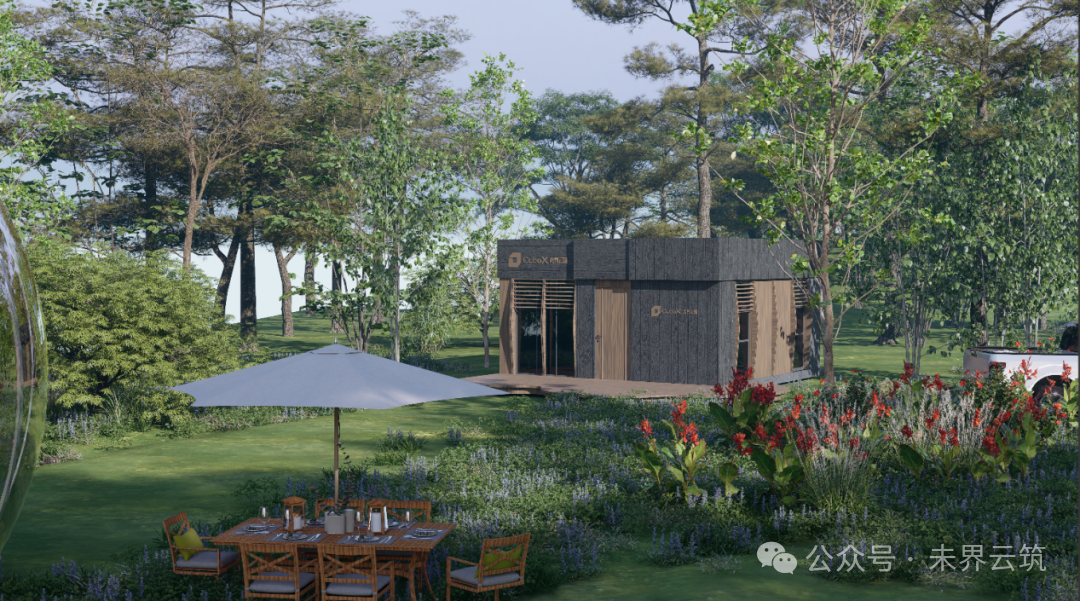
In the cultural and tourism industry, modular homestays have emerged as a new favorite. In scenic spots, coastal areas and mountainous regions, a cluster of high-quality accommodation units can be rapidly completed without large-scale civil construction. These units can be disassembled and relocated in the off-season, effectively slashing operational costs.
In the public service sector, modular buildings are widely adopted for temporary sales offices, visitor centers, exhibition spaces, emergency resettlement housing and other venues. During disaster relief operations and public health emergencies, they can be quickly erected to provide living, office and medical spaces, performing an indispensable function.
They also bring more possibilities to niche lifestyle scenarios: standalone cabins on urban fringes, mobile studios for entrepreneurs, temporary classrooms and libraries on campus, and more. Modular buildings have become a spatial carrier for diverse ways of life.
Spanning residential accommodation, public services, commercial projects and public welfare undertakings, they have developed into a practical spatial solution tailored to the diversified lifestyles of modern society.
Of course, modular housing is not without limitations.
For the time being, it cannot fully replace the urban commercial housing system. What’s more, it will take time for public perceptions to evolve.
Nevertheless, housing industrialization and modular construction have emerged as an irresistible trend across the global construction industry.
The transition from extensive manual building to sophisticated industrial manufacturing marks not just a technological upgrade, but also an evolution of the philosophy of human habitation. It tackles the longstanding flaws of traditional construction — slow progress, high costs, rigid designs and poor environmental performance. It also presents ordinary people with a brand-new choice: free from the bondage of mortgage loans and the constraints of fixed apartment layouts, they can acquire a living space truly suited to themselves at lower cost and with greater flexibility.
We once took it for granted that a home was destined to be cumbersome and immovable.
Weijie Yunzhu Modular Construction reminds us: living can inherently be light and unrestrained, and it ought to always serve life itself. In the near future, modular residences will likely step out of suburbs and scenic areas and integrate into daily urban life. More people will break free from the shackles of housing and truly embrace the right to live as they wish.


Scan to Follow

Scan to Follow


Scan to Follow


Scan to Follow